
Introduction
Singapore is one of the world’s busiest maritime hubs, making it a critical port for shipowners, managers, charterers and operators. In 2025, the Port of Singapore recorded 3.22 billion gross tonnage of vessel arrivals and 44.66 million TEUs of container throughput. This level of activity shows why every port call must be planned carefully.
For ship managers, a Singapore call is rarely limited to arrival and departure. A vessel may need crew change support, Cash to Master coordination, spares delivery, ship stores, provisions, launch boat arrangements, medical assistance, waste coordination, port documentation support or urgent technical attendance. These tasks must often be completed within a tight operating window.
This is where ship husbandry services in Singapore become essential.
Ship husbandry services cover the practical support required to keep a vessel, crew and port call moving smoothly. When husbandry is planned well, ship managers can reduce avoidable delays, improve crew welfare, control costs and keep the vessel ready for departure. When it is poorly coordinated, small issues can quickly become expensive disruptions.
This guide explains what ship husbandry services include, what ship managers should prepare before calling Singapore and how a reliable local agent can support the vessel throughout the port call.
What Are Ship Husbandry Services?
Ship husbandry refers to the operational support services required by a vessel while it is in port, at anchorage or waiting for onward movement. It is closely connected to ship agency Singapore services, but the focus is more practical and vessel-support driven.
In simple terms, husbandry services help answer questions such as:
- What does the crew need during the port call?
- What supplies, spares or provisions must reach the vessel?
- What documents, approvals or local arrangements are required?
- What transport, launch boat or shore-side support is needed?
- What urgent support must be completed before the vessel sails?
For ship managers, vessel husbandry is not only an administrative task. It directly affects crew welfare, operational readiness, cost control, compliance and vessel turnaround time.
Why Ship Husbandry Matters in Singapore
Singapore is known for efficient maritime operations, but its efficiency also means vessels must be well prepared before arrival. A port call can involve multiple stakeholders, including the master, owner, manager, charterer, local agent, suppliers, service providers, port authorities and crew handling teams.
The Maritime and Port Authority of Singapore states that vessels arriving in Singapore must make the required notifications and declarations and follow the relevant procedures. This makes early coordination important, especially when husbandry services are connected to arrival timing, crew movement, documentation or service attendance.
A reliable husbandry agent helps ship managers coordinate these moving parts. Instead of managing multiple local providers separately, the ship manager can work through one local contact who understands port procedures, supplier availability, launch boat timing, documentation flow and practical port-call execution.
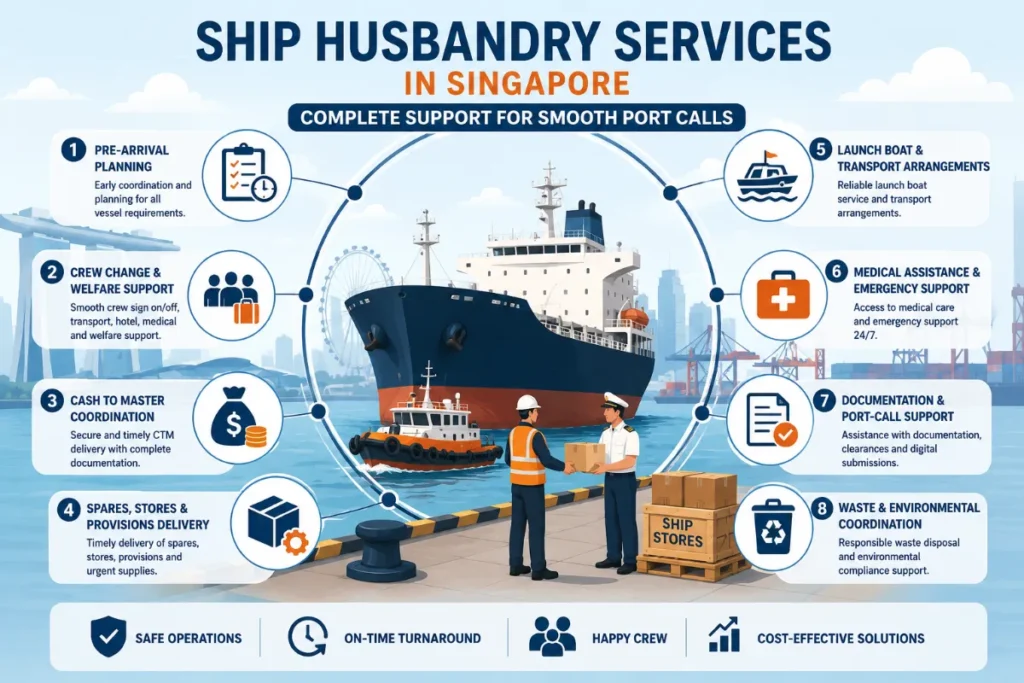
Complete Ship Husbandry Services Checklist for Singapore Port Calls
1. Pre-Arrival Planning
Good husbandry starts before the vessel reaches Singapore. The local agent should receive clear instructions as early as possible so that services can be checked, scheduled and confirmed.
Ship managers should prepare:
- Vessel name, IMO number, flag and call sign
- ETA, ETD and expected location
- Berth, anchorage or OPL requirements
- Purpose of call
- Full list of husbandry services required
- Crew movement details, if applicable
- CTM requirements, if applicable
- Spares, stores or provisions needed
- Medical or welfare support required
- Service provider attendance requirements
- Billing instructions and approval process
- Contact details for master, superintendent, owner and manager
Clear pre-arrival instructions help the agent confirm what is feasible, identify missing information and prevent last-minute confusion.
For documentation-related preparation, ship managers can also refer to Edtech Marine’s guide on Port Clearance in Singapore.
2. Crew Change and Crew Welfare Support
Crew welfare is a major part of ship husbandry. Singapore is an important location for crew movement, but successful crew change requires accurate planning, documentation and shore-side coordination.
Husbandry support may include:
- Crew sign-on and sign-off coordination
- Transport between vessel, airport, hotel and shore-side locations
- Hotel or layover arrangements
- Launch boat coordination where required
- Baggage handling support
- Medical appointment coordination
- Emergency crew assistance
- Communication between vessel, crewing team and local service providers
MPA notes that crew signing on or off in Singapore apply through the ICA Crew System using digitalPORT@SG. This makes accuracy especially important. Crew details, flight timing, travel documents and vessel schedules must be aligned before the crew movement begins.
For more detailed reading, link this section to Edtech Marine’s guide on crew change in Singapore.
3. Cash to Master Coordination
Cash to Master, commonly known as CTM, is still required by many vessels for crew wages, onboard expenses or operational needs.
A local husbandry agent can help coordinate CTM by confirming the amount, currency, delivery method, timing and required acknowledgement from the vessel.
Ship managers should provide:
- Requested CTM amount
- Currency
- Purpose of funds
- Vessel location
- Delivery timing
- Master’s confirmation
- Receipt or acknowledgement requirements
- Billing instructions
Because CTM involves financial handling, instructions should always be clear, written and approved by the appropriate party.
4. Spares, Stores and Provisions Delivery
Ship husbandry often involves delivery of urgent items to the vessel. These may include spares, deck stores, engine stores, provisions, safety items, documents or parcels.
Common vessel requirements include:
- Engine room consumables
- Deck consumables
- Technical spares
- Cabin and galley supplies
- Fresh provisions
- Safety-related replacement items
- Documents and courier items
- General ship stores
Timing is the main challenge. A delivery may need to reach a vessel at berth, anchorage, shipyard or through launch boat transfer. Ship managers should provide packing details, supplier contact information, item description, delivery deadline and receiving-party details.
For related internal linking, use Edtech Marine’s ship spares logistics article and ship supplies page.
5. Launch Boat and Transport Arrangements
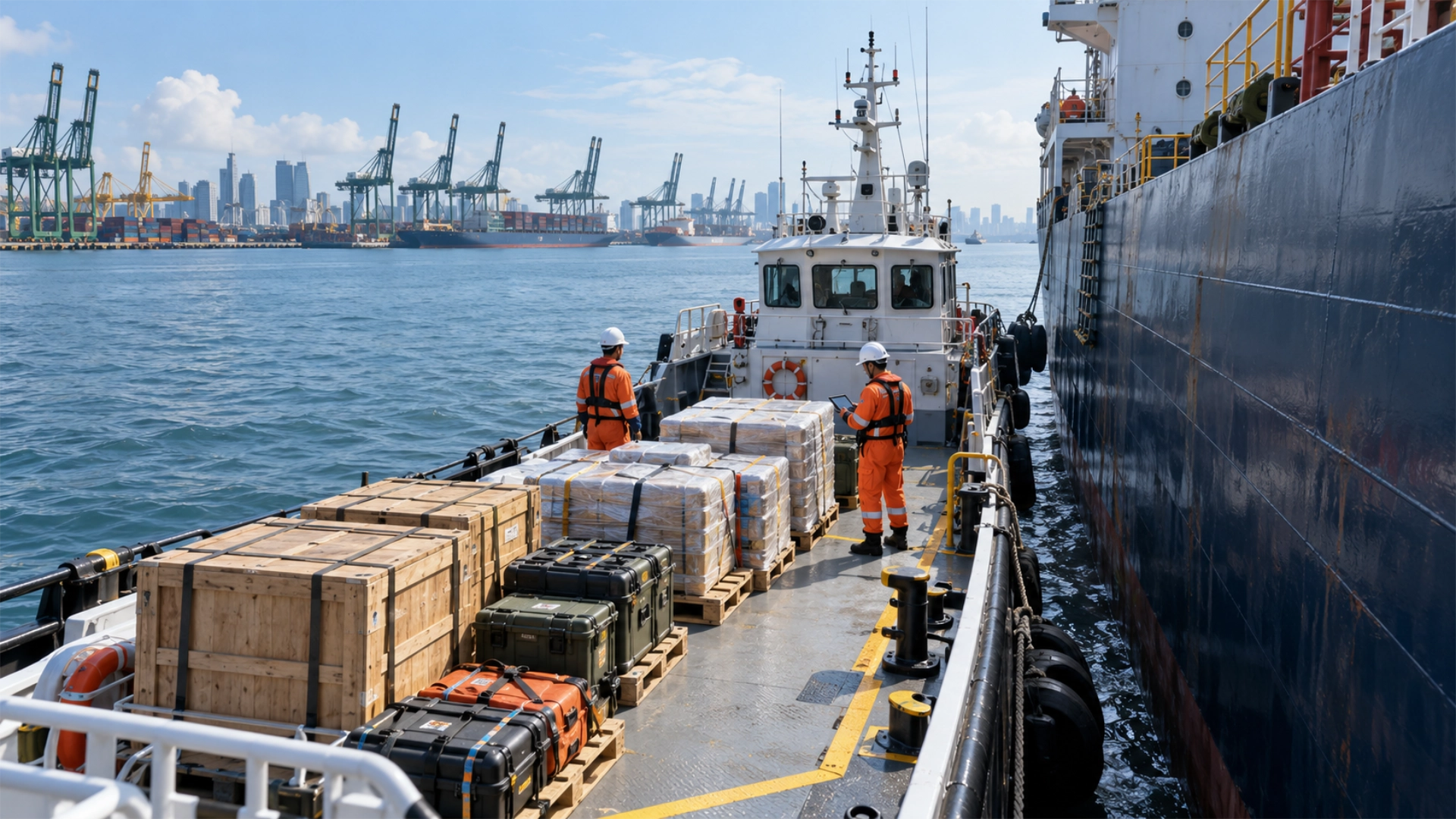
Not every husbandry task happens alongside berth. Some vessels require support at anchorage or offshore locations. In these cases, launch boat coordination becomes an important part of the husbandry plan.
Launch boat support may include:
- Personnel transfer
- Crew transfer
- Spares delivery
- Stores delivery
- Document delivery
- Superintendent attendance
- Technician attendance
Shore-side transport is also important. Crew, technicians, surveyors, suppliers and documents may all need to move between the airport, office, hotel, warehouse, terminal and launch point.
For anchorage and offshore support context, link to Edtech Marine’s article on OPL and cargo boat operations in Singapore.
6. Medical Assistance and Emergency Support
Medical support requires fast coordination and careful communication. A crew member may need urgent care, routine medical attention, dental support, prescription assistance or follow-up after arrival.
Ship managers should prepare:
- Crew member name and role
- Basic description of the medical concern
- Urgency level
- Travel document details
- Vessel location
- Escort or transport requirements
- Contact person onboard
- Contact person from the crewing team
A local husbandry partner can help coordinate medical appointments, transport, shore-side communication and updates to the ship manager. For urgent cases, clear instructions and fast response are critical.
7. Documentation and Port-Call Support
Although husbandry services are practical in nature, documentation still plays a major role. Missing or inconsistent information can delay crew handling, delivery, authority submission or service attendance.
Common documents and information may include:
- Crew list
- Vessel particulars
- Arrival and departure details
- Service orders
- Delivery notes
- Packing lists
- Supplier invoices
- CTM instructions
- Medical support documents, where applicable
- Travel documents, where applicable
- Billing and approval instructions
MPA’s digitalPORT@SG supports digital port and marine transactions. For ship managers, this reinforces the need to provide accurate information early so the agent can support the correct local process.
8. Waste and Environmental Coordination
Waste handling should be planned carefully during a Singapore port call. Depending on vessel location and requirements, husbandry support may include coordination for garbage disposal, oily residue handling, sewage-related arrangements or approved waste reception services.
MPA provides information on garbage collection services for ships’ waste at designated anchorages in the Port of Singapore. Ship managers should still confirm the type of waste, quantity, vessel location, timing and any special handling needs with the local agent.
A practical waste coordination checklist should include:
- Type of waste
- Estimated quantity
- Vessel location
- Preferred collection timing
- Required receipts or disposal records
- Any special handling requirements
Using authorised service providers and keeping proper records helps reduce compliance risk.
9. Technical Attendance and Service Provider Coordination
Ship husbandry may also involve coordination for technicians, surveyors, inspectors or repair teams. The husbandry agent may not perform the technical work directly, but they can help arrange access, transport, launch boat support and communication.
This may include:
- Technician boarding arrangements
- Launch boat booking
- Tool or spare-part delivery
- Coordination with vessel staff
- Attendance timing against ETA or ETD
- Service completion confirmation
The scope of work should be clearly defined before attendance. Service providers should know the equipment involved, the issue reported, the expected access onboard and the latest sailing schedule.
10. Cost Control and Reporting
Husbandry services can involve several providers. Without clear tracking, costs may increase quickly, especially when urgent requests are made close to the vessel’s arrival or departure.
Ship managers should control costs by:
- Confirming scope before work begins
- Requesting quotations where practical
- Avoiding unclear verbal instructions
- Consolidating related services where possible
- Checking invoices against approved work
- Keeping written records of changes
- Asking for service completion confirmation
A good husbandry agent provides updates during the port call and helps the ship manager track open items before the vessel sails.
What Ship Managers Should Prepare Before a Singapore Call
Before the vessel arrives, ship managers should prepare a clear husbandry request. This makes it easier for the local agent to coordinate efficiently.
Use this checklist:
- Vessel name, IMO number, flag and call sign
- ETA, ETD and expected location
- Purpose of call
- Crew movement details
- CTM amount and delivery instructions
- Spares, stores and provisions requirements
- Supplier contacts and delivery notes
- Launch boat or transport requirements
- Medical support needs
- Service provider attendance details
- Waste disposal requirements
- Billing instructions
- Priority level for each request
- Contact details for master and shore team
The clearer the instruction, the easier it is to avoid repeated follow-up and last-minute delays.
Common Mistakes to Avoid
Sending Requests Too Late
Late requests reduce the available options for launch boat, transport, suppliers, technicians and documentation support. Early planning gives the agent more time to confirm availability and control cost.
Giving Incomplete Instructions
A request such as “please arrange delivery to vessel” is not enough. The agent needs to know what is being delivered, where it is coming from, who is receiving it, when it must arrive and whether the vessel is at berth, anchorage or another location.
Not Prioritising Critical Items
Not every request has the same urgency. Ship managers should clearly identify what must be completed before departure and what can be handled later.
Separating Husbandry From Port-Call Planning
Husbandry affects crew movement, spares delivery, documentation, service attendance and departure readiness. It should be treated as part of the full port-call plan, not as a side task.
For broader operational planning, link this section to Edtech Marine’s article on reducing vessel turnaround time in Singapore Port.
How a Local Husbandry Agent Helps Reduce Delays
A local husbandry agent acts as the coordination point between the vessel and shore-side stakeholders. This is especially useful when the owner or manager is overseas and needs a trusted team on the ground in Singapore.
A reliable agent helps by:
- Consolidating vessel requirements
- Coordinating local service providers
- Managing launch boat and transport timing
- Supporting crew welfare arrangements
- Arranging spares, stores and provisions delivery
- Assisting with CTM coordination
- Supporting documentation flow
- Communicating updates to the ship manager
- Tracking open items before departure
This local coordination can make the difference between a smooth port call and a stressful one.
Why Choose Edtech Marine for Ship Husbandry Services in Singapore
Edtech Marine supports vessel operators with practical ship agency and husbandry coordination in Singapore. For owners, managers and charterers, the value lies in having a local team that can coordinate multiple port-call requirements through one communication point.
Through its ship agency Singapore services, Edtech Marine supports vessels requiring:
- Crew change and crew handling coordination
- Cash to Master coordination
- Spares and stores support
- Ship supplies and provisions coordination
- Launch boat and transport arrangements
- Medical and welfare support
- Supplier and service provider coordination
- Port-call communication between vessel and shore teams
- Support for urgent vessel requirements
For ship managers handling vessels from overseas, this local support helps reduce uncertainty and gives the vessel clearer coordination during a busy Singapore call.
Conclusion
Ship husbandry services in Singapore are essential for efficient, safe and well-coordinated port calls. They cover far more than basic vessel attendance. A strong husbandry plan brings together crew welfare, CTM, spares, stores, launch boat coordination, transport, documentation, medical assistance, waste support and technical service coordination.
For ship managers, the most important step is early preparation. Clear instructions, accurate documentation and timely communication allow the local agent to coordinate efficiently and reduce avoidable delays.
With the right husbandry partner, a Singapore port call becomes easier to manage, even when the vessel has multiple urgent requirements and a tight sailing schedule.
Contact Edtech Marine for ship husbandry services, ship agency support and port-call coordination in Singapore.
Frequently Asked Questions
What are ship husbandry services?
Ship husbandry services are practical vessel support services required during a port call. They may include crew handling, CTM coordination, transport, launch boat arrangements, spares and stores delivery, medical support, documentation assistance, waste coordination and service provider coordination.
What do ship husbandry services in Singapore usually include?
In Singapore, ship husbandry services commonly include crew change support, Cash to Master coordination, shore-side transport, launch boat arrangements, medical assistance, spares and stores coordination, provisions support, waste coordination and communication with local service providers.
What should a ship manager prepare before requesting husbandry services?
A ship manager should prepare the vessel ETA, location, crew list, service requirements, delivery instructions, supplier details, CTM instructions, medical support needs, billing details and priority level for each request.
What is the difference between ship husbandry and ship agency?
Ship agency is a broader service that may include port clearance, authority coordination and port-call representation. Ship husbandry focuses more specifically on practical vessel support, such as crew welfare, transport, supplies, CTM, medical support and service coordination.
Why is a local husbandry agent important in Singapore?
A local husbandry agent understands Singapore port procedures, supplier availability, launch boat coordination, transport arrangements and documentation flow. This helps ship managers reduce delays, improve communication and handle urgent vessel requirements more efficiently.
Can husbandry services support vessels at anchorage?
Yes. Depending on vessel location, timing and operational feasibility, husbandry support may include launch boat coordination for crew, technicians, documents, spares or stores delivered to vessels at anchorage.
How can ship managers reduce husbandry costs?
Ship managers can reduce husbandry costs by planning early, consolidating requests, providing complete instructions, avoiding last-minute changes, comparing service options where practical and working with a reliable local agent who can coordinate efficiently.









4 thoughts on “Ship Husbandry Services in Singapore: Complete Checklist for Ship Managers”
Pingback: Ship Chandler Singapore: 8 Proven Signs of Reliable Service
Pingback: Maritime Logistics Company Singapore: 7 Proven Best Tips
Pingback: Marine Logistics Services in Singapore: 7 Steps for Success
Pingback: Ship Supply Chain Management: 7 Proven Ways Singapore Keeps Vessels Moving