Introduction
Port agency Singapore services play a vital role in ensuring efficient vessel arrivals, port operations and departures. As one of the world’s leading maritime hubs, Singapore handles vessels engaged in international trade, bunkering, cargo operations, repairs and crew movements. For shipowners, charterers and vessel operators, a successful port call requires careful planning, accurate documentation and coordination between multiple parties.
An experienced port agent provides essential local support, managing vessel clearance, crew changes, husbandry services and port call arrangements. Effective coordination helps minimise operational disruptions, manage port-related costs and avoid unnecessary delays.
This guide explains how port agency services in Singapore work, the responsibilities of a port agent and what shipowners and charterers should consider when appointing a marine agency provider.
What Is Port Agency in Singapore?
Port agency refers to the services provided by a local shipping agent who represents shipowners, charterers or vessel operators during a vessel’s call at port.
In Singapore, the port agent serves as a coordination point between the vessel and the various organisations involved in its operations. These may include the Maritime and Port Authority of Singapore (MPA), terminal operators, immigration authorities, marine service providers and suppliers.
The agent’s responsibilities typically include:
- Coordinating vessel arrival and departure arrangements.
- Preparing and submitting relevant port documentation.
- Liaising with port authorities and service providers.
- Arranging crew changes and husbandry requirements.
- Coordinating marine supplies and technical support.
- Monitoring port call activities and communicating operational updates.
- Managing port-related expenses and disbursement accounts.
The scope of services depends on the vessel’s requirements and the terms of the agency appointment.
For vessel operators managing multiple port calls, experienced local representation provides continuity and helps address operational issues before they disrupt the schedule.
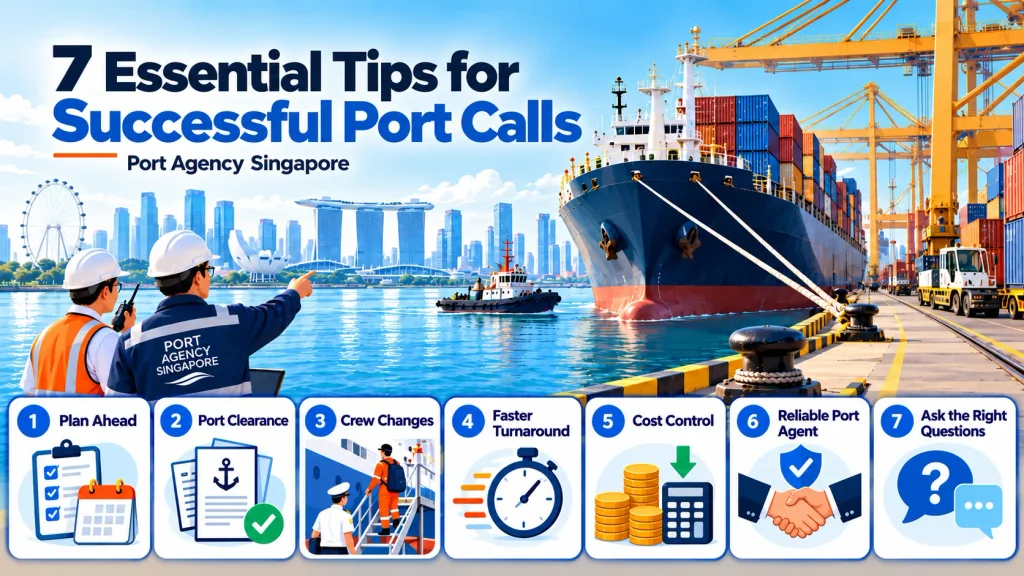
1. Pre-Arrival Planning and Port Call Coordination
An efficient port call begins before a vessel reaches Singapore waters.
Port agents work with the vessel’s master, owner or charterer to establish the purpose of the call, expected arrival time, required services and anticipated departure schedule.
Pre-arrival coordination may involve confirming:
- Vessel particulars and relevant documentation.
- Estimated time of arrival (ETA).
- Berthing or anchorage arrangements.
- Pilotage and towage requirements.
- Cargo operations, bunkering or other scheduled activities.
- Crew changes and personnel movements.
- Marine supplies, repairs and technical requirements.
Accurate information at this stage is essential. Changes to arrival schedules can affect berth availability, service provider arrangements and the sequence of activities during the port stay.
Singapore’s digitalPORT@SG platform supports digital port clearance and Just-in-Time planning to improve coordination across port activities.
For shipowners and charterers, the value of effective pre-arrival planning lies in identifying dependencies early and ensuring that the necessary arrangements are in place.
2. Port Clearance and Regulatory Documentation
One of the principal responsibilities of a port agent is coordinating the documentation required for vessel entry and departure.
Singapore has established reporting and clearance procedures administered by the MPA and other relevant authorities.
Depending on the vessel type, cargo and nature of the port call, the process may involve:
- Arrival notifications and pre-arrival declarations.
- Vessel registration and particulars.
- Crew and passenger information.
- Port health and immigration requirements.
- Cargo-related documentation.
- Arrival and departure general declarations.
- Applications for departure port clearance.
The MPA requires an arrival general declaration within 24 hours of a vessel’s arrival and a departure general declaration before departure, subject to the applicable procedures.
Under digitalPORT@SG, ship agents and other authorised parties can submit and manage port clearance applications digitally.
Incomplete documentation, inaccurate declarations or late submissions may create avoidable complications.
An experienced port agent helps coordinate submissions, verify the information received and follow up on any outstanding requirements. However, the master, owner and other responsible parties remain accountable for their respective statutory obligations.
For a detailed explanation, read our guide to Port Clearance in Singapore: Documents, Process and Agent Role.
3. Crew Changes and Husbandry Services
Crew welfare and personnel movements are important components of port agency operations.
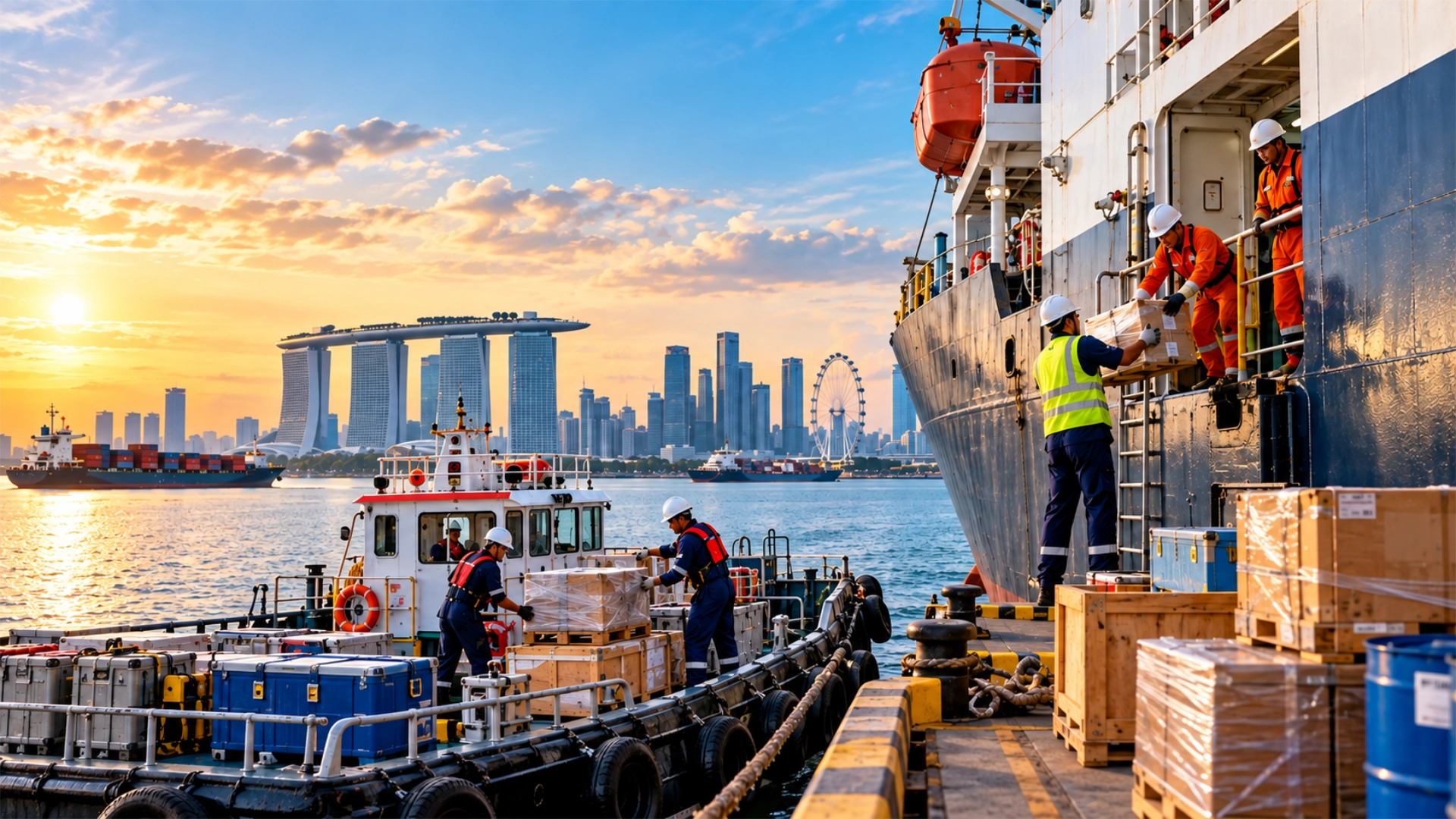
When vessels call at Singapore for crew changes, the agent may coordinate arrangements with immigration authorities, transport providers and other service partners.
These arrangements can include crew sign-on and sign-off coordination, transfers between the vessel and shore, travel logistics and associated documentation.
Beyond crew changes, ship husbandry services support the vessel’s operational and personnel requirements during its stay.
Typical husbandry arrangements include:
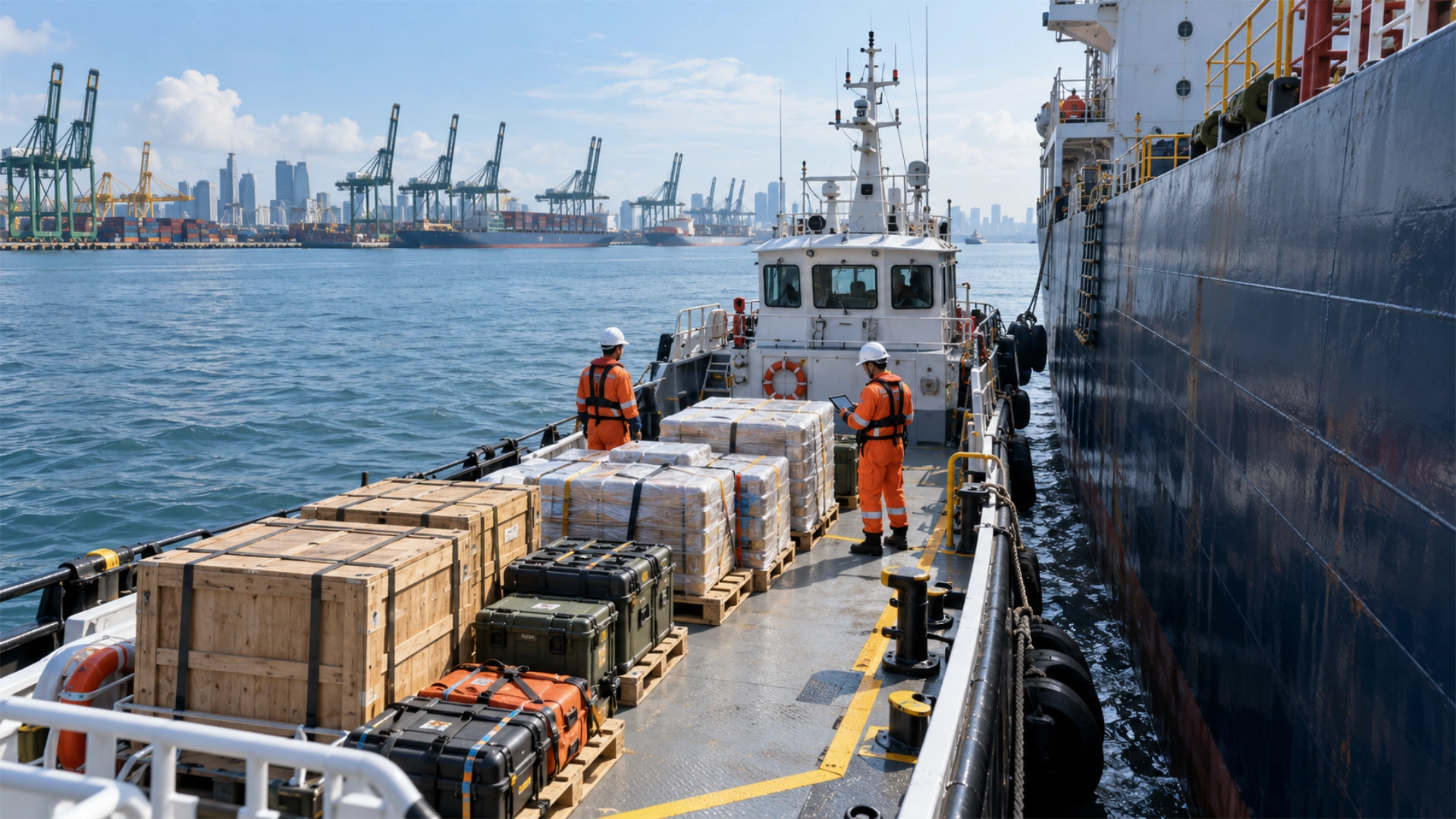
- Delivery of provisions and essential supplies.
- Coordination of spare parts and technical equipment.
- Crew transportation and personnel logistics.
- Medical attendance when required.
- Delivery of documents and onboard necessities.
- Coordination of approved contractors and service providers.
Timing is particularly important when multiple services must be completed within a limited port window.
For example, a vessel scheduled for bunkering, crew changes and urgent spare-part delivery may require several service providers to attend within a short period.
Coordinating these activities efficiently helps minimise disruption to the vessel’s planned departure.
4. Supporting Efficient Vessel Turnaround
Vessel turnaround time is a major operational consideration for shipowners and charterers.
Although port delays can arise from circumstances beyond the agent’s control, effective coordination can reduce avoidable waiting time and improve communication among the parties involved.
Port agents support efficient vessel turnaround through:
Early identification of requirements: Confirming the vessel’s needs before arrival helps prevent last-minute service requests.
Timely communication: Updates on berth availability, service schedules and changes to the ETA allow stakeholders to adjust their plans.
Coordinated service attendance: Arranging activities in a logical sequence can reduce unnecessary operational conflicts.
Prompt issue resolution: Identifying documentation discrepancies, supplier delays or other constraints early allows corrective measures to be considered.
Departure readiness: Ensuring that required documentation and outstanding arrangements are addressed before the vessel is scheduled to sail.
A well-managed port call does not necessarily mean every activity can be completed faster. Instead, it ensures that the vessel’s available time is used effectively.
Read more about Reducing Vessel Turnaround Time in Singapore Port.
5. Managing Port Costs and Disbursement Accounts
Cost visibility is another important consideration when appointing a port agent.
Port calls can involve multiple charges, including port dues, pilotage, towage, agency fees, launch services, transport and other third-party expenses.
Depending on the appointment, a port agent may prepare a Proforma Disbursement Account (PDA) before the vessel arrives. This provides an estimate of anticipated port-related expenses.
Following the completion of the port call, a Final Disbursement Account (FDA) records the actual expenses incurred.
Shipowners and charterers should expect clear explanations of the charges, appropriate supporting documentation and timely reconciliation.
It is also important to clarify which expenses are included in the agency fee and which will be billed separately.
Transparent communication about costs makes it easier to budget for port calls and address discrepancies.
6. What to Look for When Appointing a Port Agent in Singapore
Selecting a port agency provider should involve more than comparing agency fees.
Shipowners, charterers and vessel operators should evaluate whether the agent can provide the coordination, responsiveness and operational coverage required for the vessel’s specific call.
Several considerations are particularly important.
Local Port Knowledge
A port agent should understand Singapore’s port procedures, reporting requirements and operational environment.
Familiarity with the requirements of the relevant authorities and service providers can support more effective planning and communication.
Responsive Communication
Port operations do not always follow standard business hours.
Changes in vessel schedules, operational requirements or service availability can arise at any time.
An agent with accessible support and clear communication procedures is better placed to coordinate these changes.
Scope of Services
Not all agency appointments require the same support.
Some vessels may require port clearance and basic attendance, while others need crew changes, extensive husbandry arrangements, technical coordination and multiple deliveries.
Confirming the scope of services before appointment helps establish expectations.
Operational Coordination
Agents should be able to coordinate with relevant service providers and communicate changes promptly.
Where several activities are scheduled during a short port stay, this becomes particularly important.
Cost Transparency
Agency fees, anticipated third-party charges and payment arrangements should be clearly explained.
A transparent approach to disbursements helps principals manage their operational budgets.
7. Questions to Ask Before Appointing a Port Agent
Before confirming a port agency appointment in Singapore, vessel operators should establish the practical requirements of the service.
Useful questions include:
- What services are covered by the proposed agency appointment?
- Will the agent coordinate arrival and departure clearance requirements?
- Is operational support available outside normal business hours?
- Can the agent arrange crew changes, husbandry and vessel supplies?
- How will changes to the vessel’s ETA or port schedule be communicated?
- What information and documents must be supplied before arrival?
- Will a Proforma Disbursement Account be provided?
- How will additional costs and third-party services be approved?
Clear answers help establish a practical working arrangement between the vessel’s principal and the appointed agent.
Port Agency and Ship Agency: Is There a Difference?
The terms port agency and ship agency are often used interchangeably, although they can describe different scopes of responsibility.
Port agency generally focuses on the representation and coordination of a vessel during a particular port call.
Ship agency is a broader term that can include port agency, liner agency, cargo agency and other forms of shipping representation.
For a shipowner or charterer appointing an agent for a Singapore port call, the more important consideration is the scope of services agreed upon.
The appointed agent should understand the vessel’s operational requirements and be able to coordinate the necessary arrangements throughout its stay.
Port Agency Services in Singapore with Edtech Marine
At Edtech Marine, we understand the importance of reliable local coordination in supporting vessel operations.
Our marine agency team provides 24/7 support for shipowners and charterers, assisting with port call arrangements and maintaining communication throughout the vessel’s stay in Singapore.
Our capabilities include port agency coordination, vessel husbandry, crew changes, logistics, vessel IT support and technical support.
By bringing together these services, we help vessel operators coordinate their requirements through a dedicated local point of contact.
Whether a vessel is calling for cargo operations, crew movements, supplies or technical requirements, effective planning and timely communication remain central to successful port operations.
Explore our Ship Agency and Port Agency Services in Singapore to learn more about our capabilities.
Frequently Asked Questions
What does a port agent do in Singapore?
A port agent represents a vessel’s principal during its port call, coordinating regulatory documentation, arrival and departure arrangements, communication with authorities and service providers, and other agreed operational requirements.
Is port agency the same as ship agency?
Port agency usually refers to services associated with a specific port call. Ship agency is a broader term that can cover port agency and other forms of vessel or shipping representation.
What information does a port agent need before a vessel arrives?
Typical information includes vessel particulars, ETA, last port of call, purpose of visit, crew details and planned operational activities. Additional documents may be required depending on the vessel and applicable Singapore regulations.
Can a port agent arrange crew changes and supplies?
Yes. Depending on the services offered and the agency appointment, a port agent may coordinate crew changes, personnel transport, vessel provisions, spare-part deliveries and other husbandry requirements.
How much do port agency services cost in Singapore?
Costs vary according to vessel type, duration of stay, scope of agency services and third-party requirements. Shipowners and charterers should request a breakdown of expected charges before confirming an appointment.
Plan Your Next Port Call with Edtech Marine
A successful port call depends on preparation, clear communication and effective coordination between the vessel and its local service partners.
Working with an experienced port agent in Singapore helps shipowners and charterers manage regulatory requirements, organise essential services and keep port operations on schedule.
Planning a vessel call in Singapore?
Contact Edtech Marine to discuss your port agency requirements and the support available for your vessel.