
Introduction to Marine Agency Singapore
Singapore remains one of the most important maritime hubs in the world. Its location along major global trade routes has positioned it as a critical gateway connecting Asia, Europe, the Middle East and the Americas. At the center of this ecosystem is marine agency Singapore, a professional service sector responsible for coordinating vessel operations, regulatory compliance, cargo supervision, crew logistics and port formalities.
The Port of Singapore consistently ranks among the busiest container ports globally. It handles millions of containers each year and serves as a major transshipment hub. Its reputation is built on efficiency, strong governance, advanced infrastructure and digital integration.
In 2026, global shipping continues to evolve rapidly. Sustainability requirements are tightening. Regulations are becoming more complex. Digital systems are replacing manual processes. In this environment, marine agency Singapore services are essential for shipowners, operators and charterers seeking reliable and compliant port operations.
This article explores the structure, functions, strategic importance and future outlook of marine agency services in Singapore.
The Strategic Importance of Singapore in Global Shipping
Singapore’s maritime dominance is not accidental. It is the result of geography, planning, investment and governance.
Located along the Strait of Malacca, Singapore sits on one of the busiest shipping lanes in the world. A significant portion of global trade passes through this corridor. Ships traveling between major markets frequently stop in Singapore for refueling, cargo transfer, crew changes, or technical support.
Beyond geography, Singapore offers political stability and regulatory transparency. The Maritime and Port Authority of Singapore oversees port operations and enforces clear standards. This creates predictability for international shipping companies.
The ongoing development of Tuas Port further strengthens Singapore’s position. The port is designed as a fully automated and integrated facility that increases handling capacity while improving operational efficiency.
Marine agency Singapore services operate within this advanced ecosystem, ensuring that vessels move smoothly through one of the world’s most active maritime environments.
The Pivotal Role of Marine Agency Singapore Services
Marine agencies serve as the onshore representatives of shipowners. Their responsibilities cover the full lifecycle of a vessel’s port call. A ship agent acts as the vital link between the ship owner/operator and the various stakeholders at a port.
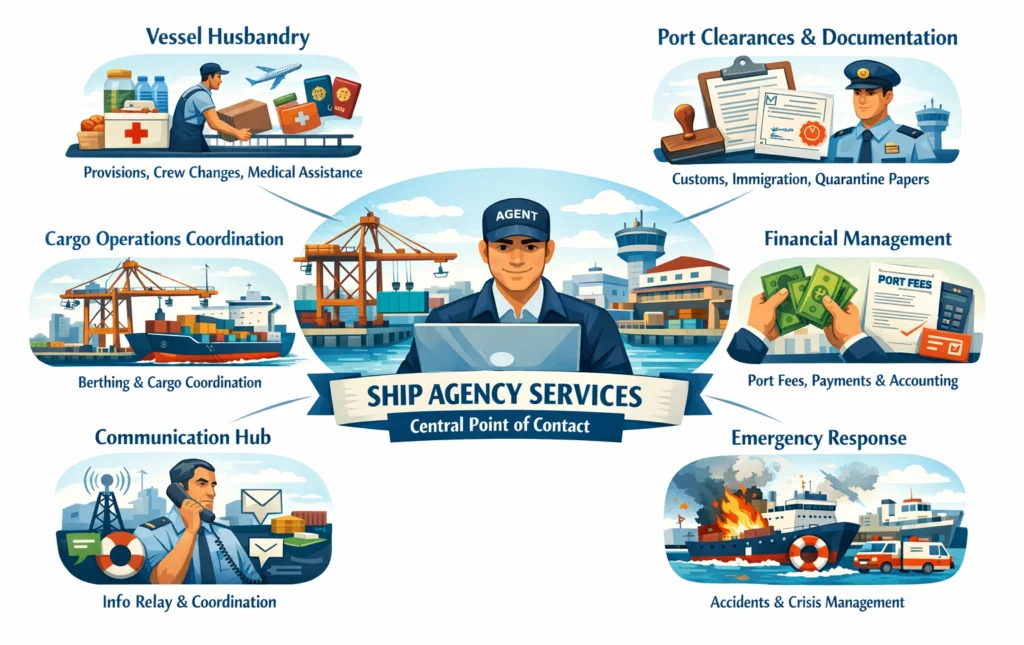
Vessel Husbandry
This encompasses a wide range of essential services. Agents ensure the vessel is supplied with necessary provisions (food, water, spare parts), manage crew changes (arranging flights, accommodation, visas) and facilitate medical assistance if required. They are the primary point of contact for any onboard needs.
Port Clearances and Documentation
Navigating the bureaucratic landscape of any port can be daunting. Ship agents meticulously handle all necessary documentation for port entry and departure, including customs declarations, immigration papers, quarantine requirements and safety certificates. This ensures compliance with Singapore’s stringent maritime regulations.
Cargo Operations Coordination
While not directly involved in the physical loading or unloading, agents play a crucial role in coordinating these activities. They liaise with terminal operators, stevedores and cargo owners to ensure efficient cargo handling, timely berthing and smooth operations minimizing vessel turnaround time.
Financial Management
Agents manage all financial transactions related to the vessel’s stay in port. This includes paying port dues, pilotage fees, agency fees and any other charges incurred. They also handle the disbursement of funds to the vessel’s crew and suppliers, providing detailed statements to the principal.
Communication Hub
The agent serves as the central communication point, relaying information between the ship, port authorities, customs, immigration and other relevant parties. Clear and timely communication is paramount in averting delays and resolving issues.
Emergency Response
In unforeseen circumstances such as accidents, pollution incidents, or equipment failures, ship agents are on the front lines, coordinating emergency response efforts and ensuring the safety of the vessel, crew, and environment.
Types of Ship Agents in Singapore:
- General Agents: These agents handle all aspects of a ship’s call, from husbandry to cargo coordination. They typically represent a shipping line or a fleet.
- Port Agents: Focused specifically on the services required during the vessel’s stay in port, including clearances and husbandry.
- Owners’ Agents: Representing the interests of the ship owner, often dealing with technical matters, repairs and financial disbursements.
- Charterers’ Agents: Acting on behalf of the charterer, primarily concerned with cargo operations and ensuring the vessel fulfills its charter party obligations.
Singapore’s World-Class Port Operations
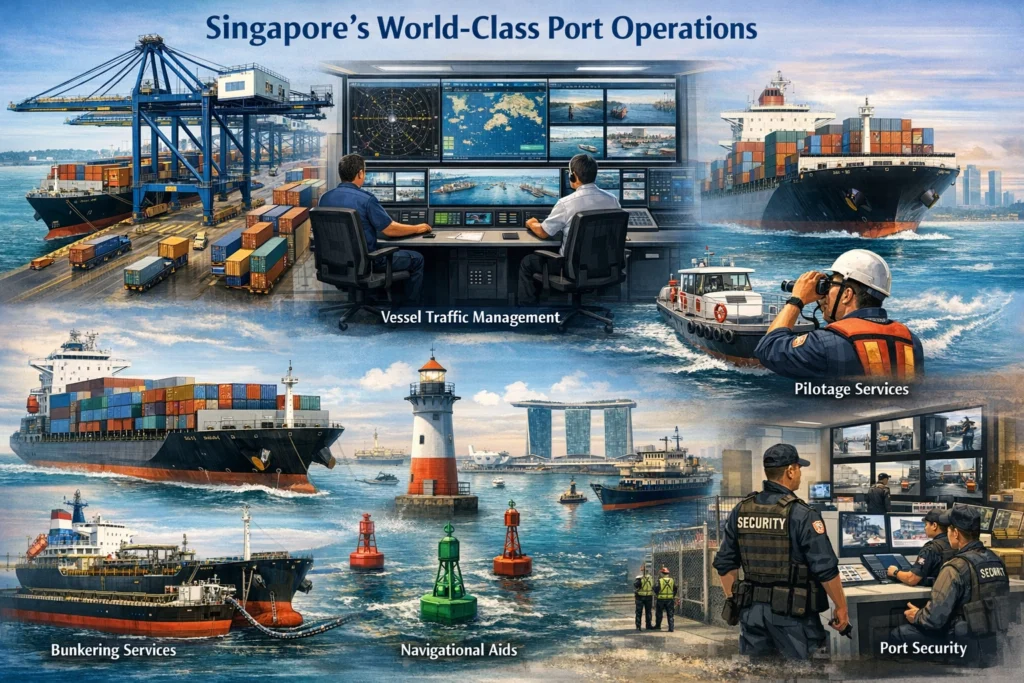
Singapore’s port is a marvel of modern engineering and operational efficiency. Managed by the Maritime and Port Authority of Singapore (MPA), the port’s operations are characterized by advanced technology, strategic planning and a commitment to sustainability.
Key Components of Port Operations:
- Terminals and Infrastructure: Singapore boasts state-of-the-art container terminals, including the massive Pasir Panjang Terminal, equipped with advanced automation and handling equipment. These terminals are designed for high throughput and efficiency, capable of handling the largest vessels afloat.
- Vessel Traffic Management: The MPA employs sophisticated Vessel Traffic Information Systems (VTIS) to monitor and manage the flow of ships within Singapore’s busy waters. This system enhances safety, efficiency and environmental protection by providing real-time information and guidance to vessels.
- Pilotage Services: Highly skilled pilots guide vessels safely into and out of the port, navigating congested waterways and tight berths. This is a critical service ensuring the safe movement of maritime traffic.
- Bunkering Services: Singapore is a leading global hub for bunkering (fueling) of ships. It offers a wide range of fuel types and adheres to strict quality and safety standards, ensuring a reliable supply for vessels.
- Navigational Aids: A comprehensive network of lighthouses, buoys and electronic navigation systems ensures safe passage for vessels, even in challenging weather conditions.
- Port Security: Robust security measures are in place to protect the port from threats, ensuring the safety of cargo, vessels and personnel. This includes adherence to international security codes like the ISPS Code.
Trends and Developments in Marine Services Singapore in 2026
The maritime industry is in constant flux, driven by technological advancements, environmental concerns and evolving trade patterns. Singapore’s port and its associated services are at the forefront of these changes.
1. Digitalization and Automation:
- Smart Port Initiatives: Singapore is heavily investing in digitalization to create a “smart port.” This includes the use of IoT (Internet of Things) devices, AI, and big data analytics to optimize port operations, improve efficiency and enhance decision-making. For ship agents, this means more streamlined digital communication and data exchange.
- Automated Guided Vehicles (AGVs) and Automated Stacking Cranes (ASCs): Terminals are increasingly deploying automated systems to handle containers, reducing reliance on manual labor and increasing speed and precision.
- Digital Platforms for Agency Services: Expect to see more digital platforms that allow ship agents to manage bookings, submit documentation and track vessel progress seamlessly.
2. Sustainability and Green Shipping:
- Decarbonization Efforts: With global pressure to reduce emissions, Singapore is actively promoting green shipping. This includes encouraging the adoption of cleaner fuels, such as LNG and methanol and investing in shore power facilities to reduce emissions from berthed vessels.
- MPA’s Green Ship Program: The MPA has initiatives to encourage the adoption of greener technologies and practices by ships calling at Singapore.
- Environmental Regulations: Stricter environmental regulations will necessitate greater diligence from ship agents in ensuring vessels comply with emission standards and waste management protocols.
3. Enhanced Cybersecurity:
- Protecting Digital Assets: As port operations become more digitized, the risk of cyber threats increases. Singapore is investing in robust cybersecurity measures to protect its critical maritime infrastructure and data.
- Agent’s Role in Cybersecurity: Ship agents will need to be aware of and adhere to cybersecurity protocols to protect sensitive information exchanged with principals and port authorities.
4. Increased Efficiency and Reduced Turnaround Times:
- Operational Optimization: Continuous efforts are being made to optimize vessel scheduling, berthing, and cargo handling to minimize vessel waiting times and turnaround times. This is crucial for ship owners looking to maximize their assets.
- Data-Driven Decisions: The use of data analytics will play a more significant role in identifying bottlenecks and implementing solutions for greater operational efficiency.
5. Evolving Regulatory Landscape:
- Adaptability is Key: Ship agents must remain abreast of evolving international and national maritime regulations, including those related to safety, security, environmental protection and labor. The MPA plays a key role in implementing these regulations.
Choosing the Right Ship Agent in Singapore
Selecting a reliable and competent ship agent is paramount for smooth port operations. In Singapore’s competitive market, consider the following factors:
- Experience and Reputation: Look for agents with a proven track record and a strong reputation within the industry. Positive testimonials and long-standing relationships with shipping lines are good indicators.
- Local Knowledge and Network: A deep understanding of Singapore’s port regulations, customs procedures and local service providers is essential. A strong network of contacts within the MPA, terminal operators, and other authorities is invaluable.
- Responsiveness and Communication: The agent should be readily available and provide prompt, clear communication. This is critical, especially during urgent situations.
- Financial Stability: Ensure the agent is financially sound to handle the significant financial transactions involved in vessel calls.
- Technological Capabilities: In line with industry trends, choose an agent who embraces technology and offers digital solutions for communication and documentation.
- Specialization: Some agents may specialize in certain types of vessels or cargo. If your needs are specific, consider an agent with that expertise.
The Strategic Advantage of Capability Partnerships
In 2026, selecting the right ship agent is no longer solely about local connections. It is also about internal competence, digital readiness and regulatory precision.
Agencies that strengthen their operational foundation through structured training frameworks and technology enabled learning platforms gain a measurable advantage. Strategic collaboration with partners such as Edtech Marine supports workforce development, compliance education, and operational consistency.
For shipowners and operators navigating Singapore’s advanced maritime environment, choosing an agent that prioritizes continuous learning and structured capability building is a forward looking and risk conscious decision.
The Future of Singapore’s Maritime Hub
Singapore’s commitment to innovation, sustainability and efficiency positions it to remain a leading global maritime hub well into the future. The MPA’s strategic vision, coupled with the dedication of its ship agents and port operators, ensures that the port will continue to be a cornerstone of international trade.
As the maritime industry navigates the complexities of digitalization, decarbonization and evolving global trade dynamics, Singapore’s port operations and the ship agency services supporting them will undoubtedly continue to adapt and thrive. By understanding these elements, stakeholders can better leverage the unparalleled advantages of calling at this vital gateway.
Expert Insights:
“Singapore’s port is not just about handling cargo; it’s about facilitating global trade with unparalleled efficiency and reliability. The synergy between advanced port operations and dedicated ship agency services is what makes this possible. As we move towards 2026, we will see even greater integration of technology and a stronger focus on sustainable practices.” – Dr. Lim Wei Ling, Maritime Economist specializing in Asian port development.
“The role of the ship agent is evolving rapidly. Beyond traditional husbandry, agents are becoming crucial partners in navigating complex digital landscapes and ensuring compliance with stringent environmental standards. In Singapore, the expectation is for agents to be proactive, technologically adept and deeply knowledgeable about the evolving regulatory framework.” – Captain Rajesh Kumar, Senior Operations Manager at a leading international shipping line.
Statistics to Note:
- Singapore’s port is consistently ranked among the busiest container ports in the world. In 2025, the port recorded a new high of approximately 44.66 million containers handled, reflecting strong growth in global trade activity. This performance highlights Singapore’s role as a major transshipment hub in global shipping.
- The maritime sector makes a significant contribution to Singapore’s economy. Maritime services, port operations, shipping support, and related logistics activities contribute around 6 to 7 percent of Singapore’s gross domestic product and support a sizeable workforce, underscoring the industry’s economic importance.
- Singapore continues to invest heavily in port infrastructure and digital technology. Major projects such as Tuas Port – slated to become one of the world’s largest fully-automated port complexes – and ongoing initiatives to enhance digital systems and smart port operations demonstrate continued capital deployment into automation and future-ready maritime capabilities.
Conclusion
Singapore’s status as a premier global maritime hub is a testament to its world-class port operations and the indispensable services provided by its ship agents. As the industry progresses towards 2026, expect a continued emphasis on technological innovation, sustainability, and operational efficiency. For any vessel calling at Singapore, a competent and proactive ship agent is not merely a service provider but a critical partner in ensuring seamless operations, compliance, and profitability. The synergy between the MPA’s strategic oversight, the advanced capabilities of the port, and the dedicated expertise of ship agents will ensure Singapore remains at the forefront of global maritime trade for years to come.
Frequently Asked Questions (FAQs)
1. What is the primary responsibility of a ship agent in Singapore?
The primary responsibility of a ship agent in Singapore is to act as the representative of the ship owner or operator, ensuring all necessary arrangements are made for a vessel’s smooth and efficient call at the port. This includes managing port clearances, coordinating cargo operations, handling vessel husbandry, managing financial disbursements, and acting as a communication liaison.
2. How does the MPA regulate port operations in Singapore?
The Maritime and Port Authority of Singapore (MPA) regulates port operations through a comprehensive framework of laws, regulations, and policies. They oversee vessel traffic management, pilotage services, safety standards, environmental protection, port security, and the licensing of maritime services. The MPA also actively promotes technological advancements and sustainable practices within the port.
3. What are the typical fees associated with ship agency services in Singapore?
Typical fees include agency attendance fees, port dues, pilotage charges, tugboat services, communication costs, and expenses for husbandry services like provisions and crew transfers. The specific costs vary depending on the vessel’s size, type, duration of stay, and the services required. Agents provide detailed breakdowns of all charges.
4. How is Singapore preparing for the future of green shipping?
Singapore is actively promoting green shipping through various initiatives. This includes encouraging the adoption of cleaner fuels like LNG and methanol, investing in shore power facilities, developing smart maritime technologies to reduce emissions, and implementing stricter environmental regulations. The MPA’s Green Ship Program supports these efforts.
5. What is the role of technology in Singapore’s port operations?
Technology plays a crucial role in Singapore’s port operations. This includes advanced automation in terminals (e.g., AGVs, ASCs), sophisticated Vessel Traffic Information Systems (VTIS) for traffic management, digital platforms for communication and documentation, and the use of IoT, AI, and big data analytics to optimize efficiency and decision-making. The port is increasingly becoming a “smart port.”
6. How can I find a reputable ship agent in Singapore for my vessel?
To find a reputable ship agent, consider their experience and reputation in the industry, their local knowledge and network within Singapore’s maritime sector, their responsiveness and communication capabilities, their financial stability, and their adoption of technological solutions. Seeking recommendations from industry peers and consulting official maritime directories can also be helpful.
External Links:
- Maritime and Port Authority of Singapore (MPA): The official government body responsible for maritime affairs in Singapore. https://www.mpa.gov.sg/
- Singapore Maritime Week: An annual event showcasing Singapore’s maritime capabilities and future developments. https://www.smw.sg/
- International Maritime Organization (IMO): The United Nations specialized agency with responsibility for the safety and security of shipping and the prevention of marine pollution by ships. https://www.imo.org/
- World Shipping Council: An industry association representing the global liner shipping industry. https://www.worldshipping.org/
- International Chamber of Shipping (ICS): The principal association of the world’s national shipowners’ associations. https://www.ics-shipping.org/









1 thought on “Marine Agency Singapore: A Strategic Guide to Ship Agency Services and Port Operations in 2026”
Pingback: 7 Strategies for Marine Safety and Compliance in Singapore