

What Is Crew Change and Why Singapore Leads the World
Crew change in Singapore refers to the process of rotating seafarers – disembarking crew finishing their contracts and onboarding new crew to continue the vessel’s operations. While this may sound simple, it involves strict immigration requirements, medical checks, logistics arrangements, and precise timing.
The Rising Demand in 2026
In 2025, crew change in Singapore has reached record levels due to:
Increased global shipping traffic
Stricter safety and staffing regulations
Growing emphasis on seafarer welfare
Singapore’s reputation for operational excellence
With more ships passing through Asia than ever before, Singapore has become a global center for reliable maritime operations.
Why the Maritime Industry Trusts Singapore
Singapore is trusted worldwide because it provides unmatched:
Predictability – consistent rules, stable operations
Safety – world-leading port security and medical standards
Efficiency – fast procedures and digital systems
Connectivity – Changi Airport enables smooth global crew travel
This combination makes Singapore a preferred choice for priority crew changes.
The Complete Crew Change Workflow in Singapore
Understanding the process helps shipping companies avoid delays and ensure smooth operations. Here’s how the workflow typically unfolds.
Pre-Arrival Digital Submissions
Before the vessel even enters Singapore waters, several documents must be uploaded:
Crew list
Passports and seaman books
Health declarations
Arrival schedule
Visa or Special Pass requests
Previous port health records
These early submissions allow Singapore’s Immigration & Checkpoints Authority (ICA) and Maritime & Port Authority (MPA) to pre-screen crew.
Port Entry & Immigration Procedures
Once the ship arrives:
Immigration officers verify documentation
Crew are granted landing permission
Health screening may occur (temperature, basic checks)
Crew either disembark or prepare for onboarding
Thanks to advanced digital systems, these approvals are usually fast and efficient.
Shore-Side Logistics & Final Handover
Crew change coordination includes:
Vehicle transfers
Hotel check-ins
Airport drop-offs
Baggage handling
Meal arrangements
This part is heavily dependent on the capability of the chosen crew change agency – experienced partners like Edtech Marine can make the entire operation smooth and stress-free.
Key Regulations Governing Crew Change in Singapore
Singapore enforces strict but predictable rules to maintain safety and efficiency.
ICA Requirements
ICA oversees:
Visa and Special Pass applications
Entry permissions
Identity verification
Nationality-based restrictions
Crew must hold valid travel documents and meet immigration conditions.
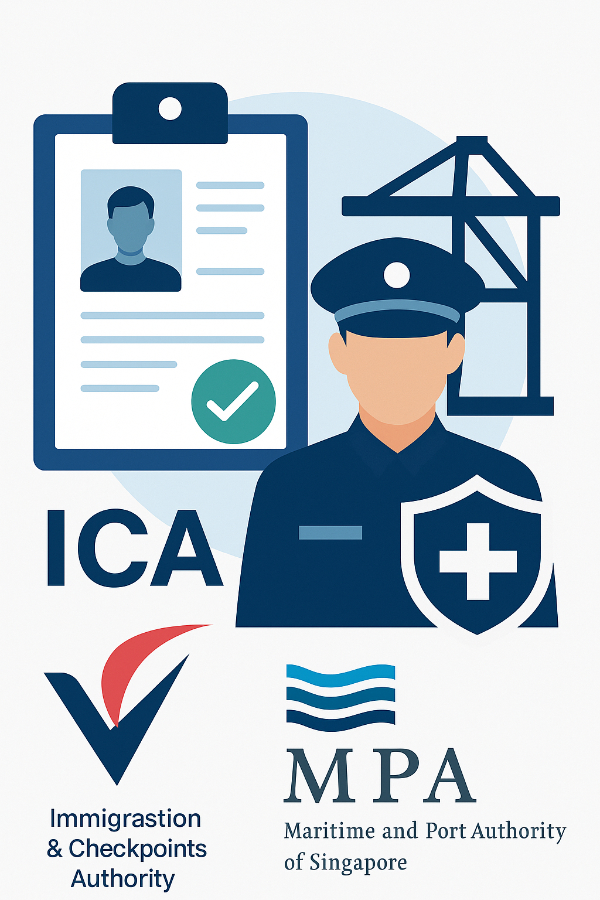
MPA Policies
Maritime and Port Authority (MPA) of Singapore ensures:
Safe vessel entry
Maritime compliance
Health declarations
Reporting of crew movements
Every crew change must meet MPA’s operational and safety standards.
Health & Security Standards
Basic health screening remains a mandatory part of crew entry. Singapore’s security standards ensure safe and controlled crew movements within port premises.
Benefits of Doing Crew Change in Singapore
Singapore stands out as one of the most dependable locations for crew change, offering advantages that consistently surpass many other regional ports.
1. Operational Predictability
Singapore’s strength lies in its stability. Clear regulations, efficient systems, and well-coordinated port operations mean that:
Approvals are processed quickly
Unexpected delays are rare
Planning becomes much more accurate
This level of predictability is invaluable for smooth crew movement.
2. High Safety Standards
Every stage of the crew change process – immigration, health screening, transport, and terminal handling – is guided by strict national safety standards. These measures ensure the well-being of both seafarers and on-shore personnel, creating a secure and controlled environment.
3. Cost & Time Efficiency
Although Singapore isn’t always the lowest-cost port, its reliability significantly reduces hidden or unexpected expenses. A well-executed crew change in Singapore helps avoid:
Missed or delayed flights
Extra nights of accommodation
Rebooking fees
Disruptions to vessel schedules
By preventing these complications, Singapore ultimately helps save time, money, and resources, making it a smart and efficient choice for crew change operations.
Smart Solutions for Crew Change in 2026
To address these challenges, the maritime sector has embraced modern tools, stronger systems, and expert partners.
1. Digital Pre-Clearance Tools
Online submission portals streamline the documentation process and reduce paperwork-related delays. This ensures authorities receive accurate information quickly.
2. Automation & Smart Port Systems
Singapore’s advanced digital port ecosystem helps automate essential operations such as:
Crew clearance
Vessel traffic scheduling
Monitoring of cargo and personnel movements
This automation minimizes human error and improves overall efficiency.
3. The Advantage of Working With Local Experts
Experienced local coordinators play a crucial role in ensuring a smooth crew change. They help:
Prevent documentation errors
Manage transport and logistics
Liaise with authorities
Keep all processes fully compliant with Singapore’s regulations
This is exactly where Edtech Marine adds immense value, offering hands-on experience, precise coordination, and round-the-clock support.
Introducing Edtech Marine – A Trusted Crew Change Partner
Ensuring a smooth and stress-free crew change in Singapore requires precision, coordination, and a deep understanding of local procedures. EdTech Marine has become a trusted name in this space, valued by crewing teams, captains, and maritime operators for their reliability and professionalism.
With extensive hands-on experience operating within Singapore’s port ecosystem, EdTech Marine combines efficiency, regulatory compliance, and genuine care for seafarers. Their approach is built on consistency, responsiveness, and a strong commitment to service.
EdTech Marine’s support covers every aspect of crew change, including:
Immigration processing and documentation
Crew transportation and port-to-airport transfers
Hotel coordination and layover arrangements
Emergency or last-minute logistics support

Their team works around the clock to adapt to changing vessel schedules, unexpected flight delays, or operational demands—ensuring each rotation remains compliant and error-free.
What clients appreciate most is their human touch. EdTech Marine communicates clearly, assists proactively, and prioritizes seafarer welfare at every stage. Whether the requirement involves a small crew rotation or a large coordinated handover, they help make the entire experience smoother, safer, and more predictable.
In a major maritime hub like Singapore, having a reliable partner like EdTech Marine provides the confidence and operational strength needed to keep vessels moving and crew members well supported.
Cost Breakdown: Crew Change in Singapore
Understanding the typical costs involved can help operators plan more accurately. While these expenses vary based on crew nationality, arrival times, and service levels, the categories below are the most common.
Visa & Government Charges
Depending on nationality, this may include:
Special Pass application fees
Visa processing charges
Security clearance checks
Port Agency Fees
These fees generally cover:
Coordination and document handling
Reporting to relevant authorities
Port clearance procedures
Supervision during crew movements
Logistics & Accommodation Costs
Supporting crew on the ground may involve:
Airport and hotel transfers
Temporary accommodation
Meal arrangements
Medical or health checks (if required)
Overall, the total cost depends on timing, crew size, travel requirements, and the complexity of the operation.
Crew Welfare: An Essential Priority
Welfare plays a critical role in successful crew change operations in Singapore. Ensuring the comfort, health, and mental well-being of seafarers is essential for maintaining morale and safety on board.
Accommodation Standards in Singapore
Singapore offers clean, safe, and well-located accommodation options for crew waiting for flights or vessels. These stays are managed with comfort and convenience in mind.
Health, Comfort & Mental Wellness
More operators now ensure that crew have access to:
Mental well-being support
Adequate rest periods
Easy access to medical facilities
These measures help seafarers recover from long voyages and prepare for the next assignment.
Seamless Crew Movement
Smooth, respectful, and well-organized transitions—from vessel to shore to airport—help create a positive and professional experience for crew members.
Technology Transforming Crew Change in Singapore
Singapore continues to invest in digital innovations that make crew change more efficient and reliable.
E-Clearance Systems
Digital immigration and pre-clearance systems significantly reduce processing times and minimize paperwork.
Maritime Workforce Platforms
These platforms support:
Certificate and documentation tracking
Rotation planning
Crew performance and history records
They help operators maintain organized, up-to-date crew data.

AI-Supported Scheduling
AI tools assist with predicting optimal rotation timings, identifying potential delays, and reducing human error in planning.
Environmental Responsibilities in Crew Change
Singapore places strong emphasis on sustainability, ensuring that all maritime activities – including crew change – are conducted responsibly and with minimal environmental impact.
Port Sustainability Policies
The port champions a wide range of eco-friendly practices, focusing on:
Reducing energy consumption
Optimizing vessel operations to cut emissions
Encouraging responsible waste management
These policies help maintain clean, efficient, and environmentally friendly port operations.
Cleaner Fuel Initiatives
Singapore is taking active steps toward a greener maritime sector by promoting cleaner alternative fuels. The increased adoption of LNG, biofuels, and other low-emission options supports national and global decarbonization goals. These initiatives also reduce the environmental footprint of vessels calling at the port.
Zero-Waste Targets
To protect its marine ecosystems, Singapore enforces strict waste management rules. Ports and vessels must follow guidelines designed to minimize waste, prevent pollution, and support long-term environmental sustainability.
Future Trends Shaping Crew Change in Singapore
As the maritime landscape evolves, several key trends are influencing how crew change operations will function in the years to come.
Automation Growth
Automation is expected to play a larger role in improving:
Scheduling precision
Document verification
Port traffic coordination
These advancements will streamline processes and reduce human error.
Skills Upgrading & Crew Training
With the rise of digital tools and smart port systems, seafarers and shore-based teams must continually upgrade their skills. Training programs focused on digital literacy and operational technology will be essential for adapting to the next generation of maritime operations.
International Maritime Collaboration
Singapore continues to collaborate closely with global maritime organisations to improve safety, standardization, and innovation across the industry. This international cooperation strengthens Singapore’s position as a forward-thinking, world-class maritime hub.
Frequently Asked Questions (FAQs)
1. Why is Singapore preferred for crew changes?
Singapore stands out because of its efficiency, reliability, and world-class port infrastructure. Clear regulations, fast processing times, and excellent connectivity through Changi Airport make it easier to coordinate smooth crew movements. Its reputation for safety and operational predictability also makes it a top choice globally.
2. Do crew members need visas to enter Singapore?
It depends on the crew member’s nationality. Many seafarers enter using a Special Pass, while others may require a visa issued by Singapore authorities. Requirements are typically clarified before arrival through pre-arrival submissions handled by the vessel or coordinating agent.
3. How long does a crew change typically take?
When documentation is prepared properly, a crew change can be completed within a few hours. The timeline may vary depending on vessel berthing, immigration processing, logistics arrangements, and health checks.
4. Are COVID-related health checks still required?
Only basic health screening—such as temperature checks or general assessments – may be carried out. Most stricter pandemic-era measures are no longer required, though procedures can change depending on global health advisories.
5. Is it necessary to work with a local coordinator for crew change?
While not legally required, working with a local coordinator greatly simplifies the process. These experts help manage documentation, organize transportation, ensure compliance with ICA and MPA regulations, and respond quickly to last-minute changes.
6. What factors influence the cost of crew change in Singapore?
Costs vary depending on several factors, including:
Nationality and visa requirements
Number of crew involved
Transport and accommodation needs
Timing (weekends, late-night arrivals, public holidays)
Port fees and clearances
Planning ahead helps manage costs more effectively.
7. How does Singapore ensure the safety of crew during changeovers?
Singapore maintains strict port security, structured immigration controls, and well-managed crew movement procedures. Health and safety standards are high, ensuring seafarers feel safe and well supported throughout the process.
8. Can crew change take place outside the main port terminals?
Yes, crew movements can occur at various designated points depending on the vessel’s location and operational needs – such as anchorage, terminals, or approved transfer points. These movements are always regulated to ensure safety and compliance.
Conclusion
Crew change in Singapore remains one of the most reliable and well-coordinated processes in the global maritime industry. With its strategic location, advanced digital systems, strong regulatory framework, and world-class port operations, Singapore continues to set the benchmark for efficiency, safety, and operational excellence.
As the maritime sector evolves, digital transformation, sustainability efforts, and enhanced workforce training are shaping the future of crew movements. Amid these changes, having knowledgeable support on the ground makes all the difference. Experienced partners—such as EdTech Marine—help ensure that every transition is smooth, compliant, and centered around seafarer welfare.
Whether managing routine rotations or navigating more complex operational demands, Singapore offers the stability and infrastructure needed to handle crew change with confidence. With the right planning and the right support, operators can depend on Singapore as a trusted, future-ready hub for their crew change operations.








2 thoughts on “Crew Change in Singapore 2026 | Trusted Port Operations”
Pingback: Port Clearance in Singapore: Documents, Process and Agent Role -
Pingback: Ship Husbandry Services in Singapore: Complete Checklist
Comments are closed.